Clarifying the critical distinction between kingdom, empire, national identity, and flags of descent[cite: 16].
The Moroccan Flag
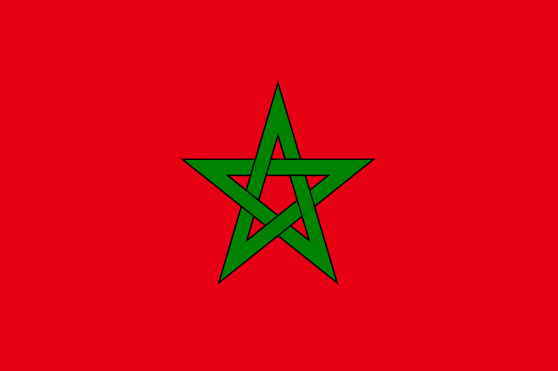
In order to overstand this section, you must first get an overstanding of the difference between a kingdom and an empire[cite: 16]. This is a source of confusion for many Moors[cite: 16]. The kingdom of Morocco sits on the northwestern corner of Africa and is a member of the Moroccan Empire, just like the United States of America[cite: 16]. Morocco is a country, while the Moroccan Empire was the global presence of the Moroccan people[cite: 16]. The people here were part of the empire, but they were not from the country of Morocco[cite: 16].
In 1912, when the Sultan surrendered to France, the star was removed from Morocco's flag, and that was the end of the Moroccan empire[cite: 16]. The removal of the star was to symbolize France's occupation of Morocco[cite: 16]. However, Morocco did not cease to be a globally recognized nation and country[cite: 16]. Later, Spain took Morocco from France[cite: 16]. Today, France and Spain still possess pieces of the Moroccan empire[cite: 16]. In other words, Morocco was under a French and Spanish Protectorate before it got free in 1956[cite: 16].
When Noble Drew Ali retrieved the flag with the star while Morocco was still under French and Spanish occupation, North America did not become Morocco[cite: 16]. It symbolized that the nations here may have been under the Moroccan protectorate[cite: 16]. Globally, that flag has always been recognized as the Moroccan flag[cite: 16]. Also, Noble Drew Ali never said that it was our national flag[cite: 16]. He said that it was the flag of our descent[cite: 16].
The people here did not call themselves Moroccans[cite: 16]. They were the Delawares, Mohawks, Cayugas, Onondagas, Wyandot, etc., and they had their own flags[cite: 16]. The proof is in the first treaties that the indigenous people signed with the United States of America[cite: 16].